Does XERF Work? What the Published Evidence Actually Shows
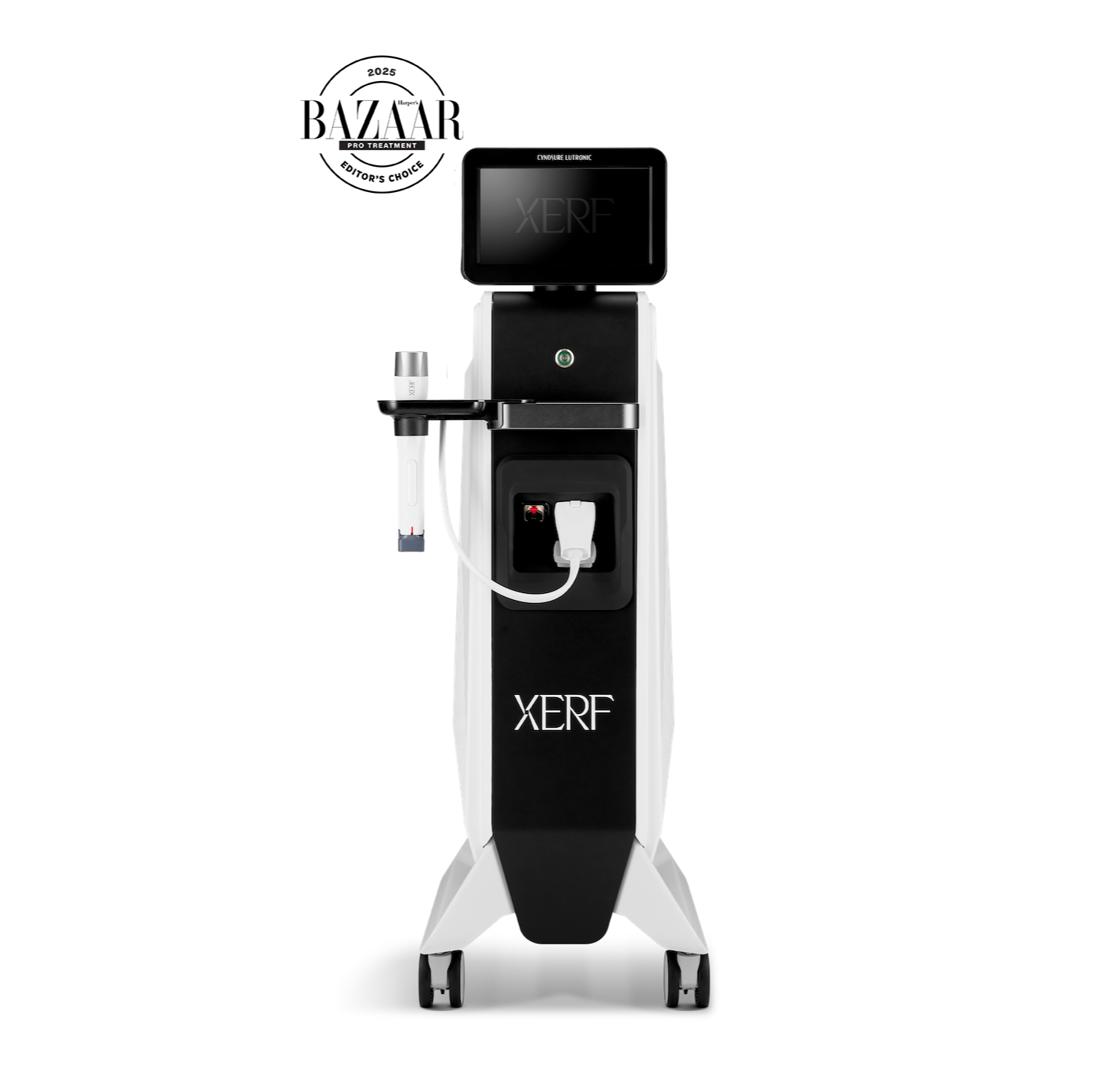
- Three small human studies published between January 2025 and August 2026 have reported improvements in facial laxity and skin quality after XERF treatment, with generally favourable tolerability and safety findings. Between them, they analysed 75 people.
- None was randomised, none had a control group, two of the three were retrospective, and no published XERF study has reported analysed outcomes beyond roughly three months.
- XERF has early, reasonably consistent human evidence pointing in a positive direction, on a small and short-term base. That is a meaningfully different statement from "clinically proven".
- No published human study has directly imaged or measured movement of the SMAS after XERF treatment. Connecting preclinical depth data to "XERF lifts the SMAS in patients" is an inference, not a finding.
- Current published evidence does not support treating XERF as a replacement for a surgical facelift. Measured changes around the brow were in the region of one to one and a half millimetres.
- XERF should not be described as painless. In the two studies that recorded pain, average scores sat around the middle of a 0 to 10 scale, most people tolerated treatment without numbing, and individual experience varies.
Three small human studies published between January 2025 and August 2026 have reported improvements in facial laxity and skin quality after XERF treatment, and all three reported generally favourable tolerability and safety findings. Between them, they analysed 75 people.
None was randomised. None had a control group. Two of the three were retrospective. And no published XERF study has reported analysed outcomes beyond roughly three months.
So the fair answer is that XERF has early, reasonably consistent human evidence pointing in a positive direction, on a small and short-term base. That is a meaningfully different statement from "clinically proven", and it is a very different statement from the claims circulating about XERF lifting the same tissue layer a facelift addresses.
This article goes through what has actually been published, what each study measured, what it found, and what its own authors said it cannot show. If you want to know what the treatment involves, what areas it can treat and whether it might suit you, that is covered on our XERF skin tightening treatment page. This one is about the research.
What does the published research on XERF actually consist of?
A recurring problem in how XERF is discussed online is that three very different kinds of evidence get blended into one impression. Human studies, laboratory and animal work, and general radiofrequency research all get quoted together, often in the same paragraph, as though they carry equal weight for the question "will this work on my face".
They do not. Here is the full published picture, separated properly.
Human studies of XERF
| Study | Design | Participants | Sessions | Follow-up | Main outcome measures |
|---|---|---|---|---|---|
| Weiss et al., Cureus, March 2026 | Prospective, multicentre, single-arm. No control, no sham, no blinding | 39 completed, across 4 clinical sites | 2 | 30 and 90 days | Investigator-scored Global Aesthetic Improvement Scale, patient satisfaction, adverse events |
| Erlich, Dahan and Wolf, Lasers in Medical Science, August 2026 | Retrospective, single centre. No control, no blinding | 16 women | 1 | 1 and 3 months | 3D stereophotogrammetry, periorbital morphometry, computerised skin-quality analysis, FACE-Q, pain, adverse events |
| Hwang, Medical Lasers, 2025 | Retrospective, single institution. No control. Blinded image assessors | 20 women | 1 | 12 weeks | Blinded identification of post-treatment images, GAIS, satisfaction, pain, adverse events |
Total analysed human participants across all three: 75.
Preclinical and laboratory studies of XERF
These were carried out in animal tissue or by computer modelling, not in treated patients.
| Study | Type | What it examined |
|---|---|---|
| Hong et al., Skin Research and Technology, 2024 | Letter to the editor reporting histological findings | Tissue-level effects of dual-frequency monopolar radiofrequency |
| Park et al., Journal of Cosmetic Dermatology, 2024 | Porcine model study | Dermal temperature regulation and remodelling |
| Ko et al., Lasers in Medical Science, 2025 | Computational modelling plus histological analysis | Thermal reactions produced by 6.78 MHz and 2 MHz radiofrequency |
Broader monopolar radiofrequency evidence, not XERF
Monopolar radiofrequency1Monopolar radiofrequencyRadiofrequency energy delivered through a single treatment electrode with a separate return pad elsewhere on the body, so current passes through deeper tissue. XERF delivers monopolar radiofrequency at 6.78 MHz and 2 MHz. as a technology has been used in aesthetic medicine since the early 2000s and has a much larger literature than XERF specifically. That literature includes randomised controlled trials, such as a 2025 prospective randomised controlled study of a monopolar radiofrequency device published in Lasers in Surgery and Medicine by Wang and colleagues.
That study did not use XERF. It is evidence about the category, not about this device. It is legitimate context for understanding how radiofrequency skin tightening works in general, and it is not a substitute for device-specific data.
What did the prospective multicentre XERF study find?
The largest and methodologically strongest of the three human studies was published in Cureus on 2 March 2026 by Robert Weiss, Jordan Wang, Barry DiBernardo and Ashish Bhatia.
Thirty-nine participants across four clinical sites completed the study. The protocol permitted up to three treatments at four-week intervals, but every participant completed after two sessions. Energy was delivered at shallow, middle and deep settings depending on the facial area and the concern being treated. Standardised photographs were taken at baseline, 30 days and 90 days.
Improvement was rated on a five-point Global Aesthetic Improvement Scale2Global Aesthetic Improvement Scale (GAIS)A rating scale on which an assessor grades overall change in appearance compared with baseline, from worsened through no change to marked improvement. The exact points on the scale vary between studies.. A score of 3 or above was recorded in 84.6% of participants (33 of 39) at 30 days and 92.3% (36 of 39) at 90 days, both statistically significant. Patient satisfaction of 4 or above on a six-point scale was reported by 79.5% at 30 days and 84.6% at 90 days. No long-lasting adverse events occurred.
Those are encouraging numbers, and the multicentre design is a genuine strength: results came from four separate clinical teams rather than one enthusiastic practitioner.
Two things temper how far they can be taken.
First, the improvement scores were assigned by the principal investigators themselves, not by independent assessors blinded to which photograph came first. In aesthetic research, where outcome scoring involves judgement, that matters. It is a known source of optimism in results.
Second, there was no control group and no sham treatment3Sham treatmentA placebo-style procedure that imitates the real treatment without delivering active energy. Used in controlled studies to separate the effect of the device from expectation, time and other factors., so there is no way to separate the effect of the device from the effects of time, photography conditions, skincare changes or expectation.
The study also discloses that the manufacturer, Cynosure Lutronic, provided the device and research support, and supported data management and statistical programming. The investigators state that they retained responsibility for clinical conduct, interpretation of results and the final content of the manuscript.
What did the August 2026 retrospective XERF study add?
The most detailed measurement work published so far appeared in Lasers in Medical Science on 18 August 2026, by Guy Erlich, Eliran Dahan and Yoram Wolf, working in Israel.
This was a retrospective review of 16 adult women treated at the first author's private clinic in January 2026. Median age was 54.5 years, with a range of 25 to 73, Fitzpatrick skin types4Fitzpatrick skin typeA six-point classification (I to VI) of skin by its colour and how it responds to sun exposure, from very fair skin that always burns to deeply pigmented skin that never burns. Used in research to describe the range of skin tones treated. II to V, and facial laxity spanning mild to severe. Each had a single treatment session, chosen deliberately by the authors to test the minimum treatment effect. Patients were assessed at baseline, immediately after treatment, at one month and at three months.
What makes this study interesting is that it did not rely on before-and-after photographs and clinician opinion. It used:
- three-dimensional stereophotogrammetry5StereophotogrammetryA three-dimensional imaging method that uses multiple cameras to build a measurable 3D model of the face, allowing changes in volume and surface position to be quantified rather than judged by eye. to measure changes in facial volume distribution;
- standardised morphometric measurement of eyebrow and upper-eyelid position;
- computerised skin-quality analysis scored against population reference data;
- validated FACE-Q6FACE-QA validated patient-reported outcome questionnaire used in facial aesthetics research to measure how patients rate their own appearance, ageing and satisfaction. patient-reported questionnaires;
- pain and satisfaction scales.
What it measured around the eyes
Periorbital measurements were possible in 15 of the 16 patients. At three months, the average changes were:
- mid-pupillary brow elevation: 1.11 mm
- lateral canthal brow elevation: 1.44 mm
- superior palpebral crease elevation: 1.41 mm
Superior palpebral crease elevation was the most consistent finding, statistically significant on both sides and for the combined measure. The other two were less uniform. Mid-pupillary brow elevation reached significance on the right side but not the left, and lateral canthal brow elevation reached significance on the left but not the right.
Those are real, objectively measured changes. They are also changes of roughly one to one and a half millimetres, which is worth holding in mind against language about lifting and repositioning.
What it measured in facial volume, and the caveat that matters most
The study also recorded a pattern the authors describe as volumetric redistribution: volume increasing in the outer facial compartments and decreasing in the inner ones, measured either side of an anatomical boundary known as the line of ligaments7Line of ligamentsA reference line used in facial anatomy that joins the facial retaining ligaments and separates the inner (medial) and outer (lateral) facial compartments. The Erlich study used it as the boundary for measuring volume change.. Immediately after treatment the outer compartments gained an average of 1.37 mL and the inner compartments lost 0.49 mL. At three months the inner-compartment reduction was still statistically significant, while the outer-compartment gain was no longer significant at group level. Overall facial volume showed no significant net change at three months.
This finding is being quoted widely, and it is where care is most needed.
The authors themselves state that their volumetric method is an indirect surrogate for tissue tightening rather than a direct measure of anatomical lifting, that it has not been validated as a standardised outcome metric for skin-tightening treatments, and that the results should be read as suggestive of tissue repositioning rather than as definitive evidence of anatomical tissue displacement. They also describe their proposed explanation for how the dual-frequency effect works as speculative.
That is an unusually candid set of caveats, and they belong in any honest summary of this study.
What it measured in skin quality
Computerised analysis showed statistically significant improvement at three months in wrinkle severity, skin evenness, pore size and oiliness. Wrinkle severity and oiliness improved only by the three-month assessment, not at one month, which fits the expected timeline for collagen remodelling8Collagen remodellingThe gradual process by which the body produces and reorganises collagen after tissue is heated or injured. It develops over weeks to months rather than immediately. rather than immediate effect.
Pigmentation did not change significantly at any timepoint. This is a useful result, and not only because it is honest reporting. If uneven pigmentation is your main concern, this study gives no reason to expect XERF to address it. Pigmentation, redness, texture, laxity and volume loss are different problems, and they generally need different treatments.
Patient-reported outcomes
FACE-Q scores improved significantly for both satisfaction with facial appearance and appraisal of facial ageing, with effects established by one month and maintained at three. Patients reported feeling they looked 2.81 years younger at one month and 3.28 years younger at three months. Mean satisfaction was 4.25 out of 5 at one month and 4.19 at three months, and all 16 said they would repeat the treatment and recommend it.
The study reports no external funding. It states that Cynosure Lutronic provided administrative support for the ethics submission and performed the statistical analyses using the anonymised dataset supplied by the investigators, with no role in study design, patient selection, treatment, data collection, interpretation, manuscript preparation or the decision to publish. On author competing interests, the paper's declaration states that Guy Erlich serves as an international trainer for Cynosure-Lutronic, and that Eliran Dahan and Yoram Wolf declare no competing interests.
What did the Korean clinical study find?
The earliest of the three, published in Medical Lasers in 2025 by Jewan Kaiser Hwang, is a retrospective single-institution review of 20 women aged 28 to 63, with Fitzpatrick skin types III and IV. Each had one treatment session targeting the middle and deep dermis, with no anaesthesia or analgesia of any kind. Assessment was at 12 weeks.
Its main methodological strength is the use of two trained, blinded evaluators, which none of the other studies had.
Its primary endpoint, however, is narrower than it first appears. The evaluators were shown baseline and post-treatment photographs in randomised order and asked to identify which was which. Both evaluators correctly identified 16 out of 20 (80%), meeting the study's pre-set threshold.
That result means a change was detectable at three months by an assessor who did not know which image was which. It does not measure how large that change was, or whether a patient would consider it worth the cost.
The same two evaluators also scored improvement on a Global Aesthetic Improvement Scale from 0 to 4, covering wrinkles, pores, skin smoothness, redness and brightening, so a broader construct than laxity alone. Mean scores rose from 1.650 at baseline to 2.750 at final assessment, a statistically significant change. No participant worsened or stayed the same. Patient satisfaction averaged 7.84 out of 10, with every participant scoring 7 or higher. No adverse events were reported.
The paper states that it received no funding and declares no relevant conflict of interest. It also states that participants were recruited from patients attending a clinic affiliated with Lutronic, the device manufacturer. Both statements come from the paper itself, and readers can weigh that context for themselves.
The author's own listed limitations are that the study was retrospective, single-institution, and used volunteers, with potential for selection bias, and that it had no control arm. He recommends a future prospective study with a control group, possibly compared against single-frequency radiofrequency.
Does XERF really reach the SMAS?
This is the claim doing the most work in XERF marketing, and it needs unpicking, because the answer is different depending on what is actually being asked.
The SMAS9SMAS (superficial musculoaponeurotic system)A layer of fibrous tissue beneath the skin and fat of the face. It is the layer surgeons work with in a facelift., or superficial musculoaponeurotic system, is a layer of fibrous tissue beneath the skin and fat of the face. It is the layer surgeons work with in a facelift.
Where the depth claim comes from. XERF uses two monopolar radiofrequency frequencies, 6.78 MHz and 2 MHz. According to Cynosure Lutronic, the manufacturer, the higher frequency concentrates energy in shallower tissue while the lower frequency penetrates more deeply, and the two can be combined in a single pulse. The evidence that energy at these settings produces effects at fascial depth comes from the preclinical work: histological analysis10Histological analysisExamination of thin slices of tissue under a microscope to see structural changes at cellular level. It shows what happened in the sampled tissue, not what a face looks like months later. of treated animal tissue and computational thermal modelling.
What that evidence can and cannot establish. Preclinical work of this kind is genuinely useful. It shows that the physics behaves as intended and that measurable tissue changes occur at depth under controlled conditions. It is the right way to develop a device.
What it cannot do is tell you what happens to a person's face. Animal skin differs from human facial skin in thickness, structure and the arrangement of supporting tissue. Tissue examined under a microscope after a controlled exposure is not the same as a living face assessed months later. A measurable histological change is not the same as a visible clinical result, and neither is the same as a result a patient values.
What has actually been measured in humans. Across the three human studies: investigator-rated global improvement, blinded detection of change in photographs, patient satisfaction and perceived age, computerised skin-quality scores, brow and eyelid position changes of roughly 1.1 to 1.4 mm, and a redistribution of facial volume that the researchers who measured it explicitly describe as an indirect surrogate rather than proof of tissue displacement.
No published human study has directly imaged or measured movement of the SMAS following XERF treatment.
So the accurate position is this. There is reasonable preclinical evidence that dual-frequency monopolar radiofrequency delivers energy to fascial depth in tissue models, and there is early human evidence of modest measurable changes in facial contour and skin quality. Connecting those two into "XERF lifts the SMAS in patients" is an inference, not a finding.
Can XERF replace a facelift?
Current published evidence does not support treating XERF as a replacement for a surgical facelift.
A surgical facelift repositions and, where necessary, removes tissue. A non-invasive radiofrequency treatment heats tissue to encourage contraction and remodelling. These are different interventions producing different magnitudes of change.
The measured changes in the published XERF studies are in the region of one to one and a half millimetres around the brow, alongside improvements in skin-quality scores and patient-reported appearance. For someone with mild to moderate laxity who does not want surgery or recovery, that may be worthwhile. For someone with significant tissue descent, it is not a substitute, and a surgical opinion is the appropriate next step.
Whether your degree of skin laxity falls into the range where a non-surgical option is realistic is an assessment question, not a research question, and it should be answered in consultation.
Is a non-surgical option realistic for your degree of skin laxity?
That is an assessment question, not a research question. Your practitioner will assess your skin and explain what is realistically achievable in your case.
Book a consultationIndividual suitability and contraindications are assessed during consultation.
How long do XERF results last?
No published XERF study has reported analysed outcomes beyond approximately three months.
The Weiss study followed patients to 90 days, the Erlich study to three months, and the Hwang study to 12 weeks. That is the entire published follow-up picture.
The Erlich paper does include a six-month image for one patient, which became available while the manuscript was being revised. The authors present it for illustration only, describe the observation subjectively, and explicitly exclude it from their formal analysis. One image from one patient is not durability data.
This matters because claims that XERF results peak at three to six months circulate widely online and are not traceable to any published XERF study. They may turn out to be right. Radiofrequency stimulates collagen remodelling, which is a slow process, and it is biologically plausible that change continues past three months. But plausible is not measured, and nobody should be quoted a duration that the research has not established.
The honest position: improvement has been observed and measured up to three months. What happens after that has not yet been published.
What does the evidence say about safety and comfort?
Two of the three human studies recorded patient-reported pain on a 0 to 10 scale, and their findings converge.
| Study | Mean pain score | Distribution |
|---|---|---|
| Erlich et al. 2026 (n=16) | 4.31 out of 10 | Mild (0 to 3) in 38%, moderate in 50%, severe (7 or above) in 12% |
| Hwang 2025 (n=20) | Approximately 4.5 out of 10 | All participants scored 4 or 5. None higher, none lower |
The averages sit around the middle of the scale. Most people in these studies found the treatment tolerable, and in the Hwang study all 20 were treated with no anaesthesia at all. In the Erlich study, topical anaesthetic was not routinely offered and was used only in the 4 patients who asked for it.
But averages hide the spread. In the Erlich study, roughly 1 in 8 participants reported pain of 7 or more out of 10. Energy settings in that study were deliberately titrated upward to the point of mild to moderate discomfort, so comfort is partly a function of how hard the device is driven, not a fixed property of the treatment.
XERF should not be described as painless. It should be described as a treatment most people tolerate without numbing, where individual experience varies and settings can be adjusted.
On adverse effects, the picture is reassuring but small. The Erlich study recorded three events across 16 patients: erythema lasting one day in one patient, erythema lasting two days in another, and transient erythema with mild swelling resolving within a day in a third. No thermal injury and no persistent complications occurred, and the authors found no clinical or imaging evidence of fat atrophy, which has historically been a concern with radiofrequency treatments. The Hwang study reported no adverse events. The Weiss study reported no long-lasting adverse events.
Those results are encouraging. They are also drawn from 75 people followed for three months. Studies of that size cannot detect uncommon complications, and an absence of serious events in a small group is not the same as evidence that a treatment is risk-free. Individual suitability and contraindications should be assessed during consultation.
What has not been studied yet?
Being clear about the gaps is as useful as summarising the findings.
- No randomised controlled trial of XERF has been published. Randomised controlled evidence exists for monopolar radiofrequency as a technology, but not for this device.
- No study has compared XERF directly against any alternative. There is no published head-to-head data against Thermage, Ultherapy, HIFU or radiofrequency microneedling such as Morpheus8. Anyone claiming XERF outperforms a named competitor is not drawing on published comparative evidence.
- No study has included a control or sham group. Every human XERF study to date has treated everyone and compared them to their own baseline.
- Only one of three human studies used blinded outcome assessment, and in that study blinding applied to detecting change, not to grading its size.
- No analysed follow-up beyond three months.
- No study has established an optimal number of sessions. The published studies used one or two, chosen for study design reasons rather than derived from comparison.
- The human evidence is small and demographically narrow. Seventy-five participants in total, almost entirely women.
So, does XERF work?
On the evidence published to date: yes, in the sense that three separate research groups, using different measurement methods in three countries, have each reported improvement in facial laxity or skin quality after XERF treatment, with generally favourable tolerability and no serious adverse events reported.
That consistency is worth something. When a blinded assessor can identify which photograph came after treatment, when 3D imaging records measurable change in brow position, and when patients independently report feeling they look three years younger, those findings agreeing with each other is more persuasive than any one of them alone.
But the scale of the claim has to match the scale of the evidence. Seventy-five people, no randomisation, no controls, mostly retrospective, three months of follow-up, and manufacturer involvement of some form in all three studies. This is early-stage evidence for a new device, not an established evidence base.
What that means in practice is straightforward. XERF is a reasonable option to discuss if you have mild to moderate laxity, want a non-invasive treatment without planned downtime, and can approach it with realistic expectations about a modest and gradual change. It is not the right answer if your main concern is pigmentation, if you have significant tissue descent that would be better served by surgery, or if you want certainty about how long results will last, because that certainty does not yet exist for any patient.
The larger prospective controlled studies that all three research teams called for will settle a lot of this. Until they are published, this is what the evidence supports, and no more.
If you would like to discuss whether XERF is appropriate for your skin, you can book a consultation to talk through XERF treatment at Harley Street Injectables, where your practitioner will assess your skin and explain what is realistically achievable in your case.
Frequently asked questions
Has XERF been tested in a randomised controlled trial?
No. As of August 2026, no randomised controlled trial of XERF has been published. The three published human studies were single-arm or retrospective, and none included a control or sham group. Randomised controlled evidence does exist for monopolar radiofrequency as a broader technology, including a 2025 study in Lasers in Surgery and Medicine, but that research used a different device and does not establish results for XERF specifically.
Is the evidence that XERF reaches the SMAS from human studies?
No. The evidence that dual-frequency monopolar radiofrequency delivers energy at fascial depth comes from preclinical work: histological analysis of animal tissue and computational thermal modelling. No published human study has directly imaged or measured movement of the SMAS after XERF treatment. Human studies have measured global aesthetic improvement, skin-quality scores, patient-reported outcomes, and brow and eyelid position changes of roughly 1.1 to 1.4 mm at three months.
How many people have been studied in total?
Seventy-five. The three published human studies analysed 39, 20 and 16 participants respectively. For context, that is a smaller combined evidence base than a single mid-sized clinical trial, which is why researchers in all three papers called for larger prospective controlled studies.
- Collagen remodelling ↑
- The gradual process by which the body produces and reorganises collagen after tissue is heated or injured. It develops over weeks to months rather than immediately, which is why some skin-quality changes in the XERF studies were only seen at the three-month assessment.
- FACE-Q ↑
- A validated patient-reported outcome questionnaire used in facial aesthetics research to measure how patients rate their own appearance, facial ageing and satisfaction. It captures the patient's view rather than the clinician's.
- Fitzpatrick skin type ↑
- A six-point classification (I to VI) of skin by its colour and how it responds to sun exposure, from very fair skin that always burns to deeply pigmented skin that never burns. Used in research to describe the range of skin tones included in a study.
- Global Aesthetic Improvement Scale (GAIS) ↑
- A rating scale on which an assessor grades overall change in appearance compared with baseline, from worsened through no change to marked improvement. The number of points and who does the scoring (investigator, independent assessor or patient) vary between studies, which affects how the results should be read.
- Histological analysis ↑
- Examination of thin slices of tissue under a microscope to see structural changes at cellular level. It shows what happened in the sampled tissue under controlled conditions, not what a living face looks like months after treatment.
- Line of ligaments ↑
- A reference line used in facial anatomy that joins the facial retaining ligaments and separates the inner (medial) and outer (lateral) facial compartments. The Erlich study used it as the boundary for measuring changes in volume distribution.
- Monopolar radiofrequency ↑
- Radiofrequency energy delivered through a single treatment electrode with a separate return pad placed elsewhere on the body, so the current passes through deeper tissue. XERF delivers monopolar radiofrequency at two frequencies, 6.78 MHz and 2 MHz.
- Sham treatment ↑
- A placebo-style procedure that imitates the real treatment without delivering active energy. Used in controlled studies to separate the effect of the device from the effects of expectation, time and other changes. No published XERF study has used one.
- SMAS (superficial musculoaponeurotic system) ↑
- A layer of fibrous tissue beneath the skin and fat of the face. It is the layer surgeons work with in a facelift.
- Stereophotogrammetry ↑
- A three-dimensional imaging method that uses multiple cameras to build a measurable 3D model of the face, allowing changes in volume and surface position to be quantified rather than judged by eye.
Sources
- Robert A. Weiss, Jordan Wang, Barry DiBernardo, Ashish C. Bhatia. Clinical Outcomes Following Dual-Frequency Noninvasive Monopolar Radiofrequency Treatment for Facial Laxity and Lower Face Lifting: A Prospective Multicenter Study. Cureus. 2026;18(3):e104546. Published 2 March 2026. DOI: 10.7759/cureus.104546. PMID: 41930066. PMCID: PMC13040610. Full paper: Europe PMC (PDF).
- Guy Erlich, Eliran Dahan, Yoram Wolf. Objective and subjective retrospective evaluation of XERF, a novel single-shot dual-frequency non-invasive monopolar radiofrequency. Lasers in Medical Science. 2026;41(1):194. Published 18 August 2026. DOI: 10.1007/s10103-026-04996-0. PMID: 42611100. PMCID: PMC13486139.
- Jewan Kaiser Hwang. Evaluation of the clinical safety and efficacy of a noninvasive dual-frequency monopolar radiofrequency device in the treatment of facial photoaging sequelae in Republic of Korea: a clinical study. Medical Lasers. 2025;14(1):23-30. Published online 20 January 2025. DOI: 10.25289/ML.24.035. Full paper: Korean Society for Laser Medicine and Surgery. Not indexed in PubMed.
- Jumi Hong, Hye Guk Ryu, Chidae Park, Jinyoung Park, Kyung Kim, Kyoung Mae May Lee, Soo Il Chun. Efficacy of dual-frequency noninvasive monopolar radiofrequency in skin tightening: histological evidence. Skin Research and Technology. 2024;30(6):e13821. DOI: 10.1111/srt.13821. PMID: 38881041. PMCID: PMC11180671. A correction to this letter was published in Skin Research and Technology. 2026;32(3):e70335. DOI: 10.1111/srt.70335. PMID: 41749463.
- Chidae Park, Jumi Hong, Hye Guk Ryu, Seokhong Kim, Jinyoung Park, Kyung Kim, Jongah Won, Jungmi Lee, Soo Il Chun. Monopolar radiofrequency for dermal temperature regulation and remodeling: a porcine model study. Journal of Cosmetic Dermatology. 2024;23(12):3955-3960. DOI: 10.1111/jocd.16495. PMID: 39049551. PMCID: PMC11626309.
- Kwangchon Ko, Hye Guk Ryu, Jinyoung Park, Wanil Kim, Sangjune Kim, Jeongah Ko, Sung Bin Cho. Computational modeling and histologic analysis of 6.78- and 2-MHz monopolar radiofrequency-induced thermal reactions. Lasers in Medical Science. 2025;40(1):501. DOI: 10.1007/s10103-025-04746-8. PMID: 41315066. PMCID: PMC12662868.
- Zhongshuai Wang, Li Li, Xiaofeng Zhang, Zhenzhen Li, Yan Yan. Long-Term Efficacy and Safety of a Novel Monopolar Radiofrequency Device for Skin Tightening: A Prospective Randomized Controlled Study. Lasers in Surgery and Medicine. 2025;57(3):259-264. DOI: 10.1002/lsm.70002. PMID: 39957006.
- Cynosure Lutronic. XERF product documentation. Manufacturer information, used for device specification only.

Alice Henshaw, RN, NMP, is the Founder and Medical Director of Harley Street Injectables, a CQC registered clinic at 106 Harley Street, London. A registered nurse and independent prescriber (V300) with a Bachelor of Nursing and a Level 7 Diploma, she has more than a decade of international experience in medical aesthetics and is registered in the UK, Australia and New Zealand. She is a qualified skin biologist, a Key Opinion Leader for Allergan Aesthetics, a trainer and speaker, and the founder of SkinCycles skincare. Read more about Alice Henshaw.
LinkedIn Instagram: Harley Street Injectables Instagram: SkinCycles
All injectable and device-based treatments carry risks, and results are not guaranteed. Individual anatomy and medical history affect outcomes. Always attend a face-to-face consultation before any procedure. Treatments referenced in this article are performed at Harley Street Injectables by qualified practitioners. This article is not a substitute for professional medical advice.
This article is intended for informational purposes. It does not constitute medical advice. For personalised treatment recommendations, please book a consultation.