Clear Skin Strategies: Layering AviClear, BBL, MOXI and SkinPen for Acne Scarring
By Alice Henshaw, Founder of Harley Street Injectables
Why I Wrote This
I've lost count of how many patients have sat in my consultation room, frustrated and confused about their skin. They've tried everything, the expensive creams, the antibiotics, the strict skincare routines, and they're still breaking out. Or the acne has finally stopped, but now they're left with scars that make them just as self-conscious as the spots did.
Here's what I wish more people understood: fixing acne-damaged skin isn't about finding one miracle treatment. It's about doing things in the right order, with the right combination of tools. You can't treat scars properly while new ones are still forming. And different types of damage need different approaches.
So let me walk you through how we actually tackle this at our clinic, no marketing fluff, just what works and why.
A Quick Word on Acne Itself
About 85% of us will deal with acne at some point between ages 12 and 24. That's the vast majority of people. And for plenty of us, it doesn't stop there; I see women in their 30s and 40s all the time who are dealing with hormonal breakouts along their jawline, wondering why this is still happening to them.
The scarring bit happens when spots (especially the deeper, angrier ones) mess up the skin structure as they heal. Your body tries to patch things up with collagen1Structural protein providing skin firmness and support, but it doesn't always get the balance right.
Too little collagen? You get dents and pits in the skin. Too much? Raised, thickened scars (more common if you have darker skin, or on your chest and back).
The different scar types matter because they respond to different treatments:
Ice pick scars2Narrow, deep pits extending into the dermis layer are those tiny deep holes, they look like someone's taken a needle to your skin. They're the most common type (about 60-70% of acne scars) and honestly, the trickiest to treat because they go so deep.
Boxcar scars3Broad depressions with sharp, defined vertical edges are wider, with sharp edges, like little craters. They make up maybe 20-30% of scars.
Rolling scars4Broad, shallow undulations creating an uneven skin surface give your skin that bumpy, uneven look; broader waves rather than distinct holes. About 15-25% of scars fall into this category.
Then there's the discolouration, red marks and brown spots that hang around after spots heal. These aren't technically scars and will fade eventually on their own, but "eventually" can mean months or years, and most people want them gone sooner.
AviClear: The Acne Bit
Right, so AviClear. When this first came out in 2022, I was interested but sceptical. Another laser claiming to fix acne? We've heard that before. But the science behind this one was different, and having now used it extensively, I'm genuinely impressed.
It's the first laser that got FDA clearance specifically for treating acne. The wavelength it uses (1726nm if you're interested in the technical bit) goes after the sebaceous glands5Oil-producing glands in the skin targeted by AviClear in your skin. Not the spots themselves, but the glands that are pumping out too much sebum6Oily substance produced by skin glands that can clog pores and causing the problem in the first place.
What it actually involves:
You come in for three sessions, each about half an hour, spaced roughly a month apart. The laser has cooling built in, so most people manage fine without numbing cream. You might be a bit red afterwards for a day or two, but you can go straight back to normal life.
The results, and I'm quoting actual trial data here:
90% of patients showed visible improvement at 6 months. By 12 months, that went up to 92%. And around two-thirds were rated as clear or almost clear at the one-year mark.
What I find particularly interesting is that results keep improving even after you've finished treatment. The oil glands stay suppressed.
Who should consider it:
Anyone with moderate to severe acne who's either tried the usual prescriptions without success, or who wants to avoid going down the oral medication route.
Look, isotretinoin7Oral retinoid medication (e.g. Roaccutane) for severe acne works brilliantly for a lot of people. I'm not knocking it. But it comes with a lot of baggage; the pregnancy restrictions, the blood tests, the dry everything, the potential mood effects. Some people can't take it, some don't want to. AviClear gives them another option that doesn't involve putting anything into their body.
What it won't do:
And here's where I need to be straight with you. AviClear treats active acne. That's it. It won't make your existing scars disappear, won't fade your red marks, won't fix the pitting. For all of that, we need the other treatments I'm about to talk about.
Oh, and some people get a temporary flare-up in the first week or two, a "purge" as the congestion clears out. It settles down, but worth knowing about so you're not panicking thinking it's made things worse.
Still Breaking Out? Let's Fix That First
AviClear targets the root cause of acne without oral medication. Book a complimentary consultation to find out if you're a candidate and start building your clear-skin plan.
Book Your Free ConsultationBBL Hero: Sorting Out the Colour
Once your skin has stopped actively breaking out, the next thing that usually bothers people is the colour, all that redness and those brown marks making everything look uneven.
BBL stands for BroadBand Light. It's basically a very sophisticated form of IPL. The "Hero" version is the newest generation; faster and more comfortable than older systems.
The way it works:
You know how different colours absorb different wavelengths of light? BBL exploits that. The light gets absorbed by the red (haemoglobin8Oxygen-carrying protein in red blood cells that absorbs light in blood vessels) and the brown (melanin9Natural pigment that determines skin, hair, and eye colour in pigmented spots). Those targeted areas heat up, break down, and your body clears them away over the following days.
What happens during and after:
Sessions take 15-30 minutes. It feels like warm little snaps against your skin, not exactly pleasant but not awful either. You'll be a bit pink for a few hours afterwards. Brown spots often go darker initially before they flake off over the next week or so. Most people need a few sessions to get the full effect.
For post-acne skin specifically, BBL is brilliant at making scars less obvious. A scar that's red or purple stands out. Make it the same colour as surrounding skin and suddenly it's far less noticeable, even if the texture hasn't changed yet.
MOXI: The Texture Fix
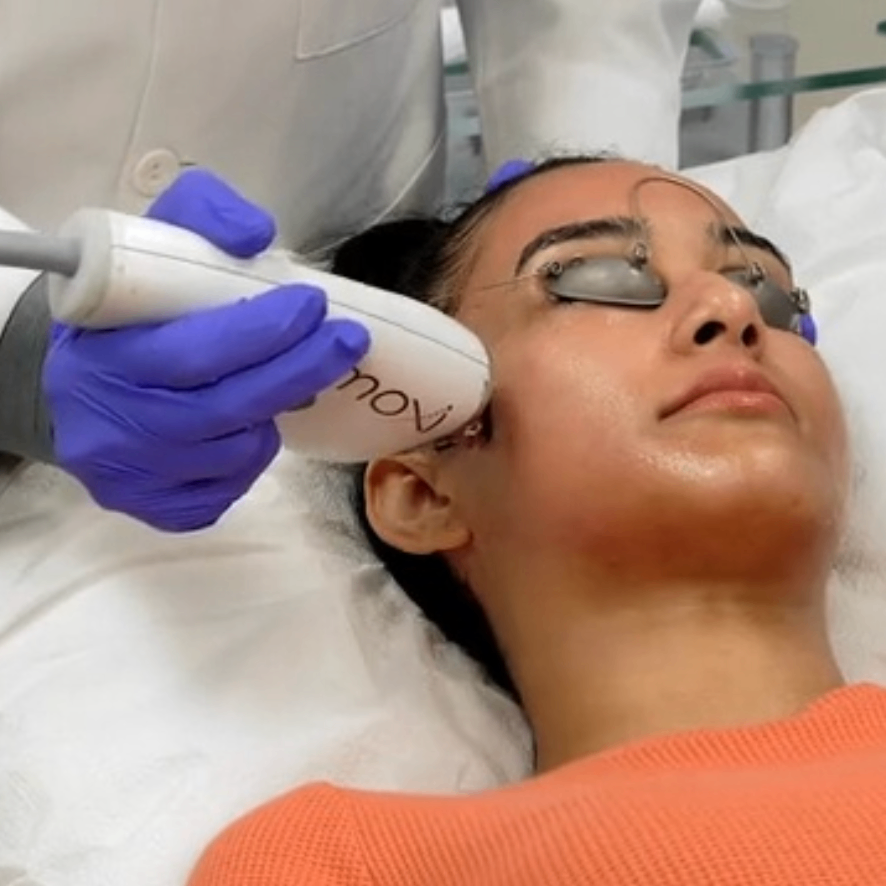
MOXI is what we call a non-ablative fractional laser10Laser that creates micro-injuries without removing the skin surface. I know that's a mouthful of jargon, so let me translate.
Some lasers work by essentially burning off the top layer of skin, effective but with serious downtime. MOXI doesn't do that. Instead, it creates thousands of tiny microscopic channels through the skin without destroying the surface. Your body responds by making new collagen to repair these micro-injuries, and that new collagen improves texture and fills in shallow scarring over time.
Why I like it for acne patients:
It smooths out uneven texture without major downtime, usually just 2-4 days of looking a bit rough and feeling like sandpaper. It helps with enlarged pores. It's safe for most skin types including darker tones. And because it's relatively gentle, you can have it done regularly as maintenance, not just as a one-off correction.
The combo approach:
In clinic, I often do BBL and MOXI together in the same session. BBL first for the colour, then MOXI for the texture. You're tackling multiple problems at once, and the skin just keeps looking better and better with each treatment in the series.
Dealing with Red Marks, Uneven Texture, or Both?
BBL and MOXI can be layered in a single session to tackle colour and texture together. Let our team design the right combination for your skin.
Book Your AssessmentSkinPen: For the Deeper Pits
Even with lasers, some scars are stubborn. The deeper ice pick and boxcar scars that go right down into the dermis11The thick middle layer of skin containing collagen and blood vessels don't always respond to surface treatments. That's where microneedling comes in.
SkinPen was the first microneedling12Controlled skin puncturing with fine needles to trigger collagen repair device to get FDA clearance specifically for acne scars. It uses tiny sterile needles to create controlled micro-injuries in the skin. Sounds brutal, but it's actually triggering your body's own healing response. Your skin makes new collagen and elastin13Protein that gives skin its ability to stretch and recoil to repair the damage, and that new tissue fills in the depressions over time.
The practical details:
We numb you up first with cream, so you don't really feel much. The session itself takes about half an hour. Afterwards you'll look like you've got moderate sunburn (pink and a bit swollen) but that settles within 24 hours or so.
I usually recommend three sessions, spaced 4-6 weeks apart. Results aren't instant because collagen takes time to build. You'll see improvement within a month, but things keep getting better for up to six months after your last session.
A major plus for darker skin:
Because microneedling doesn't use light or heat energy, there's no risk of it triggering hyperpigmentation14Dark marks caused by excess melanin production after inflammation. That's a real consideration for patients with more melanin in their skin, where some lasers need to be used very cautiously.
The clinical studies on SkinPen show about 90% of patients would recommend it to friends and family. That's a pretty solid endorsement.
How We Actually Put This Together
Everyone's skin is different, so I'm not going to pretend there's one protocol that fits all. But here's roughly how treatment plans tend to look:
If you've got moderate acne with some early scarring:
We'd start with the AviClear series, three sessions over three months to get the breakouts under control. Around month two or three, once things are calming down, we'd start BBL to work on the red marks and any pigmentation. Then a MOXI session towards the end to refine the texture.
Three months in, most people are seeing way fewer spots and their early scars already fading. Downtime throughout is basically nothing, maybe a day of looking a bit flushed.
If you've got severe acne and deep scarring:
Longer road, but still manageable. AviClear first, same as above. For really inflamed skin, we might add a short course of oral medication alongside to calm things faster.
Once the acne is under control (usually around month three or four) we start the scar work in earnest. A series of combined BBL and MOXI sessions for the widespread redness and texture issues. Microneedling sessions running in parallel to tackle the deeper pitting.
By six months, the acne should be in remission and scars noticeably better. Deep scars might continue improving beyond that with further work.
Ready to Build Your Clear-Skin Plan?
Whether you are dealing with active breakouts, scarring, or both, the right sequence of treatments makes all the difference. Book a consultation and let us map it out for you.
Start Your Treatment PlanLet's Talk Realistic Expectations
I believe in being honest with patients, even when the truth isn't what they want to hear.
Complete scar removal? Rarely achievable. Significant improvement? Absolutely.
The research suggests most people can expect somewhere in the region of 50-80% improvement in how their scarring looks after a comprehensive treatment plan. That might sound underwhelming on paper, but in real life, even 50% better can transform how someone feels about their face.
Deep ice pick scars may never completely vanish. But they can become far less noticeable. And for many people, that's enough.
Results take time too. Collagen doesn't rebuild overnight. You need patience, we're talking months, not weeks, to see the full benefit.
What You Should Be Doing at Home
Clinic treatments are only part of the equation. What you do between sessions matters too.
Keep things simple and gentle. Harsh scrubs, acids, aggressive cleansers, they irritate the skin and can trigger more oil production. Mild cleanser morning and night, decent moisturiser, that's your foundation.
Sunscreen. Every. Single. Day. I cannot stress this enough. UV exposure makes scars darker and can undo all the work we're doing. SPF 30 minimum, rain or shine, even if you're barely going outside. After laser treatments especially, your skin is more vulnerable.
Active ingredients, but at the right time. Retinoids15Vitamin A derivatives that accelerate cell turnover and boost collagen, azelaic acid16Anti-inflammatory acid that fades pigmentation and reduces acne, niacinamide17Vitamin B3 that reduces redness, pores, and pigment transfer, these can all help maintain results. But not straight after treatments when your skin is healing. We'll tell you when to introduce them.
Diet might matter more than you think. The research is mixed, but there's reasonable evidence that high-sugar, high-refined-carb diets can worsen acne in some people. Dairy too, particularly skimmed milk, though this seems to vary hugely between individuals. If you notice patterns, worth paying attention to them.
Sleep and stress aren't just wellness buzzwords. Stress hormones genuinely affect your skin, more oil, more inflammation. Easier said than done, I know, but looking after yourself helps.
Stop picking. I mean it. Every time you squeeze a spot, you're causing trauma, spreading bacteria, and massively increasing your chances of scarring. I know it's satisfying in the moment. Don't do it. Come see us instead.
The Timeline People Actually Experience
Week one to three: Don't panic if things look worse initially. Some people get a temporary flare as congestion clears. This settles.
By month three: If you've done the AviClear series, breakouts should be significantly reduced. Red and brown marks already starting to fade if we've begun BBL.
By month six: This is when the scar treatments really show their worth. Collagen has been rebuilding, texture is smoothing out, colour is evening up. Take comparison photos, people often don't realise how far they've come until they look back.
Beyond six months: Improvement continues. Very deep scars keep getting better. Most people by this point are genuinely happy with their skin, even if it's not technically perfect.
Keeping Results Long-Term
The good news: AviClear results tend to stick. Most patients stay largely clear for a year or more, sometimes much longer.
To maintain everything:
Stick with your home skincare routine. It's not exciting, but consistency matters.
Consider occasional maintenance treatments, a BBL session every six months or so, maybe an annual microneedling to keep collagen stimulated.
Come back if you notice early signs of backsliding. Catching a recurrence early is much easier than starting from scratch.
The Bottom Line
Clear skin after acne is genuinely achievable. Not overnight, not with one magic treatment, but with a systematic approach that tackles problems in the right order.
First control the acne. Then address the colour. Then work on the texture. Layer treatments intelligently. Support it all with sensible skincare.
It takes time. It takes patience. It takes working with someone who'll be honest with you about what's realistic and what isn't.
But the results can be genuinely life-changing. I see it in clinic all the time, people who've hidden behind their hair or avoided photos for years, finally feeling comfortable in their own skin.
If you're reading this and feeling hopeless about your skin, please know that you don't have to just accept it. The tools we have now are better than they've ever been. And while perfection might not be realistic, significant improvement almost certainly is.
Tired of Living with Acne or Acne Scars?
We've been treating acne and scarring across all skin types for over a decade. Complimentary consultations available, no pressure, just an honest plan for your skin.
Book Your Consultation TodayGlossary of Terms
- Collagen ↑
- Structural protein providing skin firmness and support.
- Ice Pick Scars ↑
- Narrow, deep pits extending into the dermis layer.
- Boxcar Scars ↑
- Broad depressions with sharp, defined vertical edges.
- Rolling Scars ↑
- Broad, shallow undulations creating an uneven skin surface.
- Sebaceous Glands ↑
- Oil-producing glands in the skin targeted by AviClear.
- Sebum ↑
- Oily substance produced by skin glands that can clog pores.
- Isotretinoin ↑
- Oral retinoid medication (e.g. Roaccutane) for severe acne.
- Haemoglobin ↑
- Oxygen-carrying protein in red blood cells that absorbs light.
- Melanin ↑
- Natural pigment that determines skin, hair, and eye colour.
- Non-Ablative Fractional Laser ↑
- Laser that creates micro-injuries without removing the skin surface.
- Dermis ↑
- The thick middle layer of skin containing collagen and blood vessels.
- Microneedling ↑
- Controlled skin puncturing with fine needles to trigger collagen repair.
- Elastin ↑
- Protein that gives skin its ability to stretch and recoil.
- Hyperpigmentation ↑
- Dark marks caused by excess melanin production after inflammation.
- Retinoids ↑
- Vitamin A derivatives that accelerate cell turnover and boost collagen.
- Azelaic Acid ↑
- Anti-inflammatory acid that fades pigmentation and reduces acne.
- Niacinamide ↑
- Vitamin B3 that reduces redness, pores, and pigment transfer.
About the Author
Alice Henshaw is the founder of Harley Street Injectables in London. She has over fifteen years of experience in aesthetic medicine and specialises in treating acne and acne scarring.
Clinical notes and references:
AviClear Studies:
- Goldberg D, et al. "Selective photothermolysis with a novel 1726 nm laser beam: A safe and effective solution for acne vulgaris." Journal of Cosmetic Dermatology. 2023;22(2):486-496.
PubMed: https://pubmed.ncbi.nlm.nih.gov/36576854/
Full text: https://onlinelibrary.wiley.com/doi/full/10.1111/jocd.15602 - Alexiades M, Kothare A, Goldberg D, Dover JS. "Novel 1726 nm laser demonstrates durable therapeutic outcomes and tolerability for moderate-to-severe acne across skin types." Journal of the American Academy of Dermatology. 2023;89(4):e173-e174.
PubMed: https://pubmed.ncbi.nlm.nih.gov/37328000/
ScienceDirect: https://www.sciencedirect.com/science/article/abs/pii/S0190962223010757 - Goldberg D, Ronan S, et al. "Safe and effective acne treatment across skin types with a 1726 nm sebum-selective laser: One year data from a prospective multicenter study." Journal of the American Academy of Dermatology. 2025.
https://www.jaad.org/article/S0190-9622(25)02900-7/fulltext - Scopelliti MG, Kothare A, Karavitis M. "A novel 1726-nm laser system for safe and effective treatment of acne vulgaris." Lasers in Medical Science. 2022;37:3639-3647.
SkinPen FDA Clearance:
- FDA De Novo Classification DEN160029 - SkinPen Precision System for facial acne scars
FDA Decision Summary: https://www.accessdata.fda.gov/cdrh_docs/reviews/DEN160029.pdf
FDA Clearance Letter: https://www.accessdata.fda.gov/cdrh_docs/pdf16/DEN160029.pdf
Acne Scar Classification:
- Fabbrocini G, Annunziata MC, D'Arco V, et al. "Acne scars: pathogenesis, classification and treatment." Dermatology Research and Practice. 2010;2010:893080.
PubMed: https://pubmed.ncbi.nlm.nih.gov/20981308/
PMC Full Text: https://pmc.ncbi.nlm.nih.gov/articles/PMC2958495/ - Connolly D, Vu HL, Mariwalla K, Saedi N. "Acne Scarring: Pathogenesis, Evaluation, and Treatment Options." The Journal of Clinical and Aesthetic Dermatology. 2017;10(9):12-23.
https://jcadonline.com/acne-scarring-sept2017/
PMC: https://pmc.ncbi.nlm.nih.gov/articles/PMC5749614/